Wondering whether Coconut Grove waterfront or an interior estate is the smarter fit for your lifestyle? It is a fair question, especially in a neighborhood where both options sit firmly in the luxury tier but deliver very different daily experiences. If you are weighing bay access against village convenience, or rarity against historic character, this guide will help you compare the tradeoffs with more clarity. Let’s dive in.
Why this choice matters in Coconut Grove
Coconut Grove is Miami’s oldest neighborhood and remains one of its most recognizable bayfront enclaves. It sits south of Brickell and north of Coral Gables, with a village core centered on CocoWalk and South Bayshore Drive, and it is widely known for a calmer pace, leafy streets, and shoreline access.
That setting is exactly why the waterfront versus interior decision matters so much here. In many neighborhoods, the difference may be mostly about price. In Coconut Grove, it also affects how you move through your day, what kind of architecture surrounds you, and how scarce your preferred type of property may be.
Waterfront living in Coconut Grove
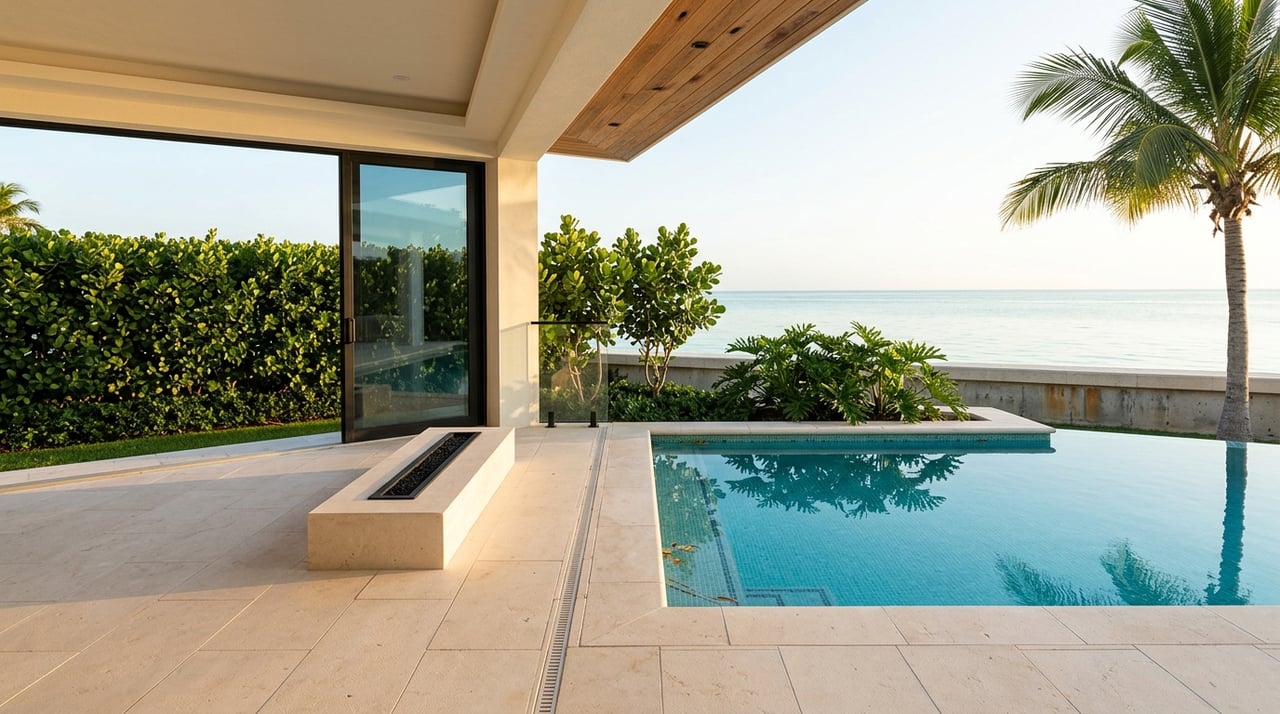
The waterfront side of Coconut Grove is the neighborhood’s most water-oriented area. The City of Miami’s Coconut Grove Waterfront and Spoil Islands Master Plan identifies the area around Dinner Key, Peacock Park, Kennedy Park, the islands, and anchorages as the waterfront heart of the Grove.
If your vision of ownership includes bay views, boating access, and immediate proximity to marinas, this part of the neighborhood aligns most closely with that lifestyle. The city also says Dinner Key Marina and Mooring Facility includes 587 slips and 250 moorings in Coconut Grove, which reinforces how central marine access is to this submarket.
What waterfront buyers usually prioritize
For many buyers, waterfront ownership is less about a simple feature list and more about how they want to live. If being close to the bay is a daily priority, the waterfront offers a setting that interior streets cannot fully replicate.
You may want waterfront if your goals include:
- Direct alignment with boating and marine access
- Bay views as a central part of the property experience
- Proximity to Dinner Key and the waterfront parks
- Ownership in a scarcer segment of the Coconut Grove market
Waterfront supply is notably thin
One of the clearest differences between these two property categories is inventory. A Q1 2026 Coconut Grove market update reported just 5 waterfront active single-family listings in January, 5 in February, and 7 in March.
By contrast, non-waterfront active listings totaled 52, 69, and 83 in those same months. That does not support a fixed rule on pricing, but it does support a strong conclusion about scarcity. Waterfront inventory is limited, and that can make each opportunity feel more specialized and less replaceable.
Interior estates offer a different luxury story
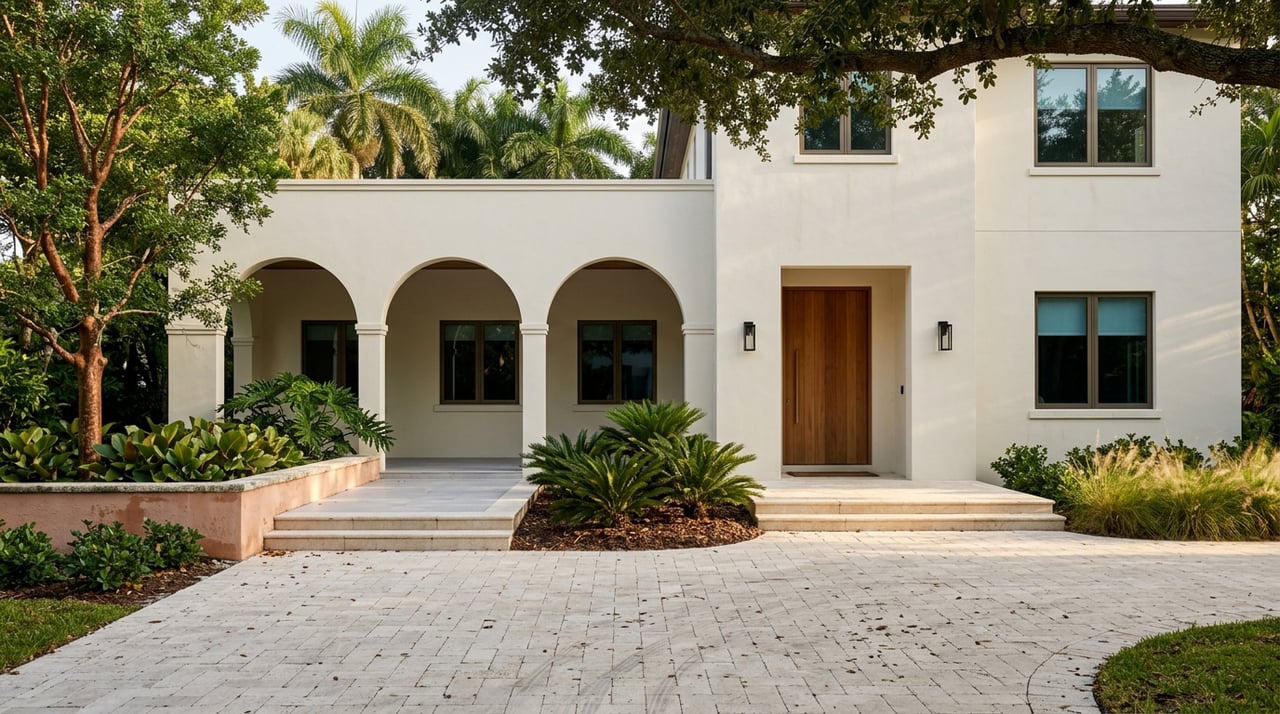
Interior Coconut Grove estates are not simply the alternative to waterfront. In many cases, they represent their own distinct luxury category, shaped by tree canopy, lot size, architectural character, and proximity to the Grove’s village core.
The City of Miami says the Coconut Grove Neighborhood Conservation District is intended to preserve the area’s heavily landscaped character, tree canopy, green space, and architectural variety. That preservation framework gives many interior streets a sense of continuity and identity that buyers specifically seek out.
Historic character shapes the interior market
For buyers who value architectural fabric, Coconut Grove’s interior can be especially compelling. Village West Island guidelines say new construction should be compatible with Caribbean vernacular style and traditional building forms associated with African-American heritage.
Miami’s historic preservation office also notes that conch houses in the Charles Avenue area and Coconut Grove West reflect Bahamian and Key West shipbuilder-carpenter traditions. In practical terms, that means interior estates often appeal to buyers who want luxury with a stronger connection to landscape, local history, and neighborhood character.
Interior estates can still reach trophy pricing
It is important not to treat interior homes as a step down from waterfront. The same Q1 2026 Coconut Grove update reported that the non-waterfront median sold price rose from $1.925 million in Q1 2025 to $3.05 million in Q1 2026.
It also reported that the highest-priced closed sale was a restored 1920s home on a 28,000-square-foot lot for $16.5 million. That is a useful reminder that exceptional interior properties can compete at the top of the market when lot size, architecture, and condition come together.
How daily life differs
Lifestyle fit often becomes the deciding factor. Waterfront and interior estates may both be prestigious, but they support different day-to-day rhythms.
The interior often has an edge for buyers who want easier access to dining, errands, and transit. The City of Miami’s Coconut Grove trolley route runs Monday through Saturday and serves the Coconut Grove and Douglas Road Metrorail stations, Bayside Park, Armbrister Park, Douglas Park, and Grove Central.
Miami and Miami Beach also notes that the Coconut Grove Metrorail Station is about a 10-minute walk from CocoWalk. Since the neighborhood core is centered on CocoWalk and South Bayshore Drive, interior locations can offer a more central everyday pattern without leaving the luxury market.
Waterfront favors a marine setting
The city’s waterfront master plan emphasizes promenades, open space, mooring fields, and pedestrian connectivity around the bayfront. That makes the waterfront feel more specialized and more closely tied to the bay itself.
If your ideal routine includes water views, marina activity, and a setting built around shoreline access, that trade may be worthwhile. You are choosing a marine environment first, with village convenience as a secondary factor.
Interior favors convenience and canopy
CocoWalk describes itself as an urban village in the center of leafy Coconut Grove. That helps explain why many interior buyers are drawn to the area’s central rhythm, where daily errands, dining, and transit access can feel more integrated into everyday life.
For some buyers, that balance is the deciding advantage. You may give up direct water access, but you gain a more connected village feel, along with the Grove’s canopy and preserved residential character.
What the broader luxury market suggests
Miami Realtors’ Q1 2026 South Florida Luxury Sales Report places Coconut Grove’s single-family luxury threshold at $7.3 million and its ultra-luxury threshold at $7.5 million. It also recorded a top transaction of $7.6 million, 5 million-dollar sales, and a 100% million-dollar market share.
That data confirms something important. Coconut Grove should not be viewed as a single pricing bucket, especially at the high end. Waterfront and interior homes are better evaluated as separate micro-markets with different supply patterns, buyer motivations, and value drivers.
A practical way to choose
If you are deciding between the two, start with the life you want the property to support. The right answer is usually less about broad market averages and more about whether the home matches your priorities.
Choose waterfront if...
- Boating and bay access are central to how you expect to live
- You want views and a direct relationship to the bay
- Marina or mooring access matters to your routine
- Scarcity and exclusivity are part of the appeal
Choose interior if...
- You want easier access to the village core, trolley stops, and Metrorail
- Tree canopy, landscaping, and preserved neighborhood character matter most
- You prefer a more residential street feel
- You want a luxury estate that may still deliver architectural significance and substantial lot size
The simplest way to frame it
Waterfront Coconut Grove is generally the stronger fit if your first priority is water access and a bayfront lifestyle. Interior Coconut Grove is generally the stronger fit if you want village convenience, canopy, and historic character while remaining in the luxury tier.
Neither is automatically better. The right choice depends on whether you value the marine setting more than centrality, or the neighborhood fabric more than direct bay access.
If you are comparing specific properties in Coconut Grove, a discreet, data-driven review of location, scarcity, and long-term fit can make the decision far clearer. To schedule a confidential consultation, connect with Chris Zdancewicz.
FAQs
Is waterfront real estate in Coconut Grove much harder to find than interior estates?
- Yes. A Q1 2026 market update reported only 5 to 7 active waterfront single-family listings per month in the first quarter, compared with 52 to 83 non-waterfront active listings.
Do interior Coconut Grove estates still qualify as trophy properties?
- Yes. Research for Q1 2026 showed a non-waterfront median sold price of $3.05 million and a highest-priced interior closed sale of $16.5 million for a restored 1920s home on a large lot.
What makes Coconut Grove waterfront homes distinct from interior homes?
- Waterfront homes are more closely tied to bay views, boating, marina access, and the shoreline setting around Dinner Key, Peacock Park, Kennedy Park, and the bayfront.
Why do some buyers prefer interior estates in Coconut Grove?
- Many buyers prefer the interior for easier access to CocoWalk, trolley service, nearby Metrorail connections, tree canopy, preserved landscaping, and historic neighborhood character.
Is Coconut Grove considered a luxury single-family market overall?
- Yes. Miami Realtors’ Q1 2026 luxury report placed Coconut Grove’s single-family luxury threshold at $7.3 million and its ultra-luxury threshold at $7.5 million, with a 100% million-dollar market share in the report period.