Travel often and want a Miami home that does not demand constant attention? In Brickell, that goal is less about flashy amenities and more about how easy a condo is to own when you are away. If you are considering a luxury lock-and-leave residence, the right building can simplify arrivals, departures, deliveries, guest access, and long stretches out of town. Let’s dive in.
Why Brickell fits lock-and-leave living
Brickell sits within Downtown Miami’s larger urban core, an area shaped around residential, office, retail, hotel, park, and civic uses. For you as an owner, that matters because daily logistics tend to be easier in a dense, service-rich environment.
The area also benefits from practical mobility options. Downtown Miami offers free trolley routes through the Brickell corridor, Metromover connections at Brickell station, Metrorail access, and a broad parking network managed in part through the Miami Parking Authority. If you want a home base that supports quick arrivals and departures, that infrastructure adds real convenience.
Start with building operations
When you are choosing a Brickell luxury condo as a lock-and-leave home, the first question is simple: how smoothly does the building run when you are not there? A beautiful view does not solve a frustrating package system, unclear guest access, or inconsistent front-desk coverage.
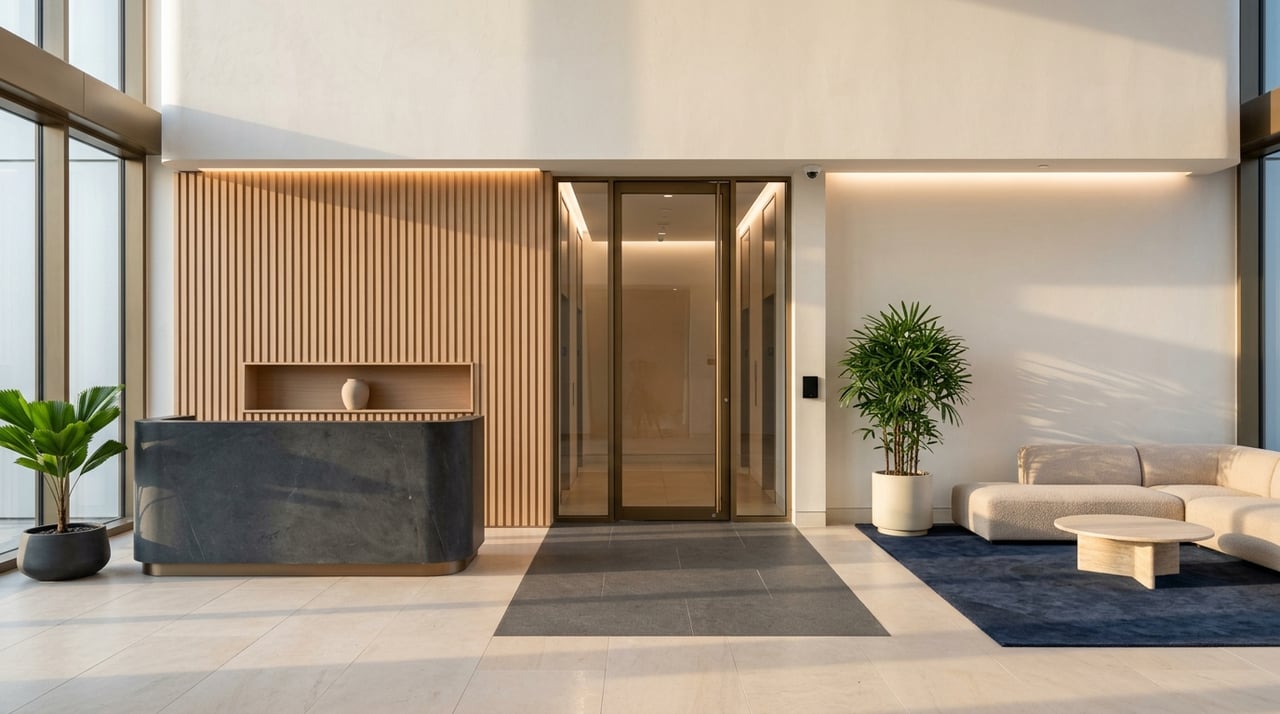
In many cases, the best amenity package is operational, not theatrical. You should pay close attention to controlled entry, a staffed lobby or concierge, package handling, valet or assigned parking, guest procedures, and service elevator access.
Look for friction-free access
A lock-and-leave condo should reduce coordination, not create more of it. If you travel often, ask exactly how you, your guests, vendors, and house staff enter the building and reach the unit.
You will want clear answers on:
- 24/7 staffed entry
- visitor and guest registration
- package room or concierge handling
- valet or deeded parking
- guest parking rules
- service elevator procedures
- vendor access while you are away
- EV charging, if relevant to your lifestyle
- resident storage, if you plan to leave items on site
These details may seem minor during a showing, but they shape how easy the condo is to own from afar.
Review condo records early
In Florida, most Brickell condo buyers are dealing with condominium associations governed by Chapter 718, even if people casually call the building an HOA. For a lock-and-leave purchase, your document review should begin early and go deeper than finishes, branding, or amenities.
Florida law requires condo associations to maintain a wide range of official records. These include governing documents, contracts, insurance policies, budgets, financial reports, inspection reports, structural integrity reserve studies, and related records. Unit owners have the right to inspect official records within 10 working days after a written request.
As of January 1, 2026, associations managing 25 or more units must post digital copies of certain records on a website or app. That shift should make transparency easier to assess in many larger buildings.
What to request
Your review should include the core documents that reveal how the building is run and whether costs appear stable. A careful document pull should include:
- declaration
- bylaws
- rules and regulations
- current budget
- latest financial report
- current management agreement
- insurance policies
- current vendor contracts
- recent bid history
- inspection summaries
- latest structural integrity reserve study
- any current special assessment notices
A polished lobby can create a strong first impression, but these records tell you how the building performs over time.
Check governance and responsiveness
For a buyer who may spend long periods away from Miami, management quality matters as much as design. One practical proxy is board cadence and responsiveness.
In Florida residential condo associations with more than 10 units, the board must meet at least quarterly and give owners a chance to ask questions at least four times each year. A written inquiry sent by certified mail must receive a written board response within 30 days.
That gives you a useful framework for diligence. If a building is slow, vague, or disorganized when answering basic pre-purchase questions, that may be a sign that future ownership will require more effort than you want.
Study the financial picture
A lock-and-leave home should feel predictable. That is why the association’s financial health deserves close attention.
Depending on annual revenue, Florida associations must prepare different levels of financial reporting, ranging from cash receipts and expenditures to compiled, reviewed, or audited statements. The audited threshold begins at $500,000 in annual revenue.
For you, the main issue is not the label on the report. It is whether operating costs, reserves, and common expenses appear consistent and well explained.
Focus on reserves and assessments
Reserve funding is not just an accounting line. It is part of your real carrying cost.
For budgets adopted on or after December 31, 2024, associations that must obtain a structural integrity reserve study generally may not waive or reduce reserve funding for required items, except in limited cases tied to milestone-inspection repairs. In practical terms, that means reserve discipline has a direct impact on ownership costs in many Florida condo buildings.
Special assessments deserve equal attention. Under Florida condominium law, special assessments are separate from regular assessments and must be noticed at least 14 days before the meeting where they are considered, with the estimated cost and purpose stated in the notice.
If you want a low-friction second home, review:
- the current budget
- the latest financial report
- reserve funding levels
- the reserve study
- any open or proposed special assessments
Understand milestone inspections and structural reviews
In older Brickell towers, structural review is central to the lock-and-leave decision. You do not want to be out of town while major uncertainty builds around inspections, repairs, or funding needs.
Florida’s milestone inspection law applies to buildings that are three habitable stories or higher. In general, the first inspection is required at age 30 and then every 10 years after that, although local enforcement can require inspections at age 25 in some circumstances, including proximity to salt water.
A structural integrity reserve study is separate from a milestone inspection. It must be completed at least every 10 years for each qualifying building, identify component life and replacement cost, and be shared with owners within 45 days.
Questions to ask older buildings
If you are touring an older tower, confirm:
- milestone inspection status
- whether any repair work was recommended
- whether repair follow-up is underway or complete
- the date of the latest structural integrity reserve study
- whether the building’s reserve plan aligns with expected capital needs
For a part-time owner, transparency here is essential.
Clarify hurricane and window responsibility
In South Florida, this point is easy to overlook and expensive to misunderstand. You should confirm who is responsible for hurricane protection, windows, and other exterior apertures for the specific unit and building.
Florida law allows boards to install or require hurricane protection that meets code, but the condominium declaration determines whether the association or the unit owner pays for installation, removal, reinstallation, repair, and maintenance. That division of responsibility can materially affect convenience, budgeting, and the amount of owner coordination required before storms.
If your goal is true lock-and-leave ownership, ask this question directly and verify the answer in the governing documents.
Review leasing flexibility carefully
If you may occasionally lease the condo, do not assume every Brickell building follows the same rules. Leasing flexibility is controlled by the recorded condominium documents, not by a general neighborhood standard.
If the association has authority to approve leases, Florida law allows it to deny a lease, and delinquent assessments may be a basis for disapproval. Approval fees are capped at $150 per applicant, renewals with the same lessee cannot be charged again, and a prospective lessee security deposit of up to one month’s rent may be required if the documents authorize it.
If a tenant occupies the unit and the owner becomes delinquent, the association can demand that rent be paid directly to the association until the arrears are cured. For that reason, you should understand the lease approval process before you buy, not after.
Ask these lease-rule questions
When reviewing a building, confirm:
- minimum lease term
- tenant approval process
- application fees
- whether there are rental caps
- whether there are waiting periods before leasing
- any practical limits that affect occasional use or seasonal leasing
A building can be ideal for personal use but still too restrictive for your backup plan.
A practical Brickell tour checklist
When you are comparing Brickell luxury condos, a disciplined checklist helps you avoid getting distracted by staging or views alone. The goal is to identify the building that stays secure, transparent, and predictable when you are away.
Use this shortlist on tours and during diligence:
- Review the declaration, bylaws, rules, budget, financials, insurance, contracts, inspection summaries, reserve study, and any assessment notices.
- Confirm milestone inspection status and any repair follow-up.
- Ask how entry, valet, guest parking, package delivery, and elevator access work when you are out of town.
- Verify lease rules, approval process, fees, rental caps, waiting periods, and minimum lease terms.
- Confirm who handles hurricane protection, windows, and exterior opening responsibilities.
- Evaluate whether reserve funding and overall cost structure feel stable enough for long absences.
What matters most in the end
The right Brickell lock-and-leave condo is usually not the one with the longest amenity list. It is the one with disciplined records, clear access procedures, stable budgeting, and a service model that works quietly in the background.
If you want a second home that supports a global lifestyle, focus on transparency, security, and administrative predictability first. Those are the qualities that make luxury ownership feel easy.
If you are considering a Brickell luxury condo and want discreet, high-touch guidance on which buildings align with a true lock-and-leave lifestyle, schedule a confidential consultation with Chris Zdancewicz.
FAQs
What makes a Brickell condo good for lock-and-leave living?
- A strong lock-and-leave condo in Brickell usually offers controlled entry, reliable staffing, clear guest and vendor access, predictable parking, smooth package handling, and transparent association records.
What condo documents should you review before buying in Brickell?
- You should review the declaration, bylaws, rules, current budget, latest financial report, management agreement, insurance policies, current contracts, inspection summaries, structural integrity reserve study, and any special assessment notices.
How do milestone inspections affect older Brickell condo buildings?
- In Florida, milestone inspections generally apply to buildings three habitable stories or higher at age 30 and every 10 years after, with earlier timing possible in some local conditions such as proximity to salt water.
Why do reserve studies matter for a Brickell second home?
- Reserve studies help show expected repair and replacement needs, and required reserve funding can affect your ongoing carrying costs in a condo building.
Can you lease out a Brickell condo when you are not using it?
- Possibly, but the answer depends on the building’s recorded condominium documents, including minimum lease terms, approval rules, fees, rental caps, and any waiting periods.
Who is responsible for hurricane protection in a Brickell condo?
- Responsibility depends on the condominium declaration, which determines whether the association or the unit owner handles installation, repair, maintenance, and related costs for hurricane protection and certain exterior components.