If you already own in Miami, moving up to a Coconut Grove waterfront estate is not just a bigger purchase. It is a different category of decision, with more capital at stake, more moving parts, and a longer view on lifestyle, risk, and legacy. If you are weighing that next move, this guide will help you think through market positioning, timing, tax-related planning points, and the waterfront due diligence that matters most. Let’s dive in.
Why Coconut Grove Stands Apart
Coconut Grove operates in a different lane than much of the broader Miami-Dade market. According to Realtor.com’s Coconut Grove market overview, the neighborhood posted a median listing price of $2.5 million in March 2026, with 357 active listings, 78 median days on market, and a 95% sale-to-list ratio.
That alone signals a luxury market. But if you are trading up to a waterfront estate, you are narrowing further into a more selective tier where location on or near Biscayne Bay, lot characteristics, boating access, privacy, and estate provenance can matter as much as square footage.
Miami-Dade’s broader luxury momentum supports that positioning. In its March 2026 update, MIAMI REALTORS® reported that countywide single-family median sale price reached $674,000, single-family sales rose 10.6% year over year, and sales of Miami properties priced at $5 million and above increased 27% year over year.
The upper end has also moved higher by definition. MIAMI REALTORS® noted that Miami-Dade’s 2025 luxury threshold for single-family homes climbed to $3.4 million, while uber-luxury reached $10.4 million. That same report highlighted the $101.5 million Banyan Ridge sale in Coconut Grove, underscoring how the Grove’s trophy-estate segment sits above the neighborhood’s already-elevated baseline.
Why Waterfront Ownership Feels Different
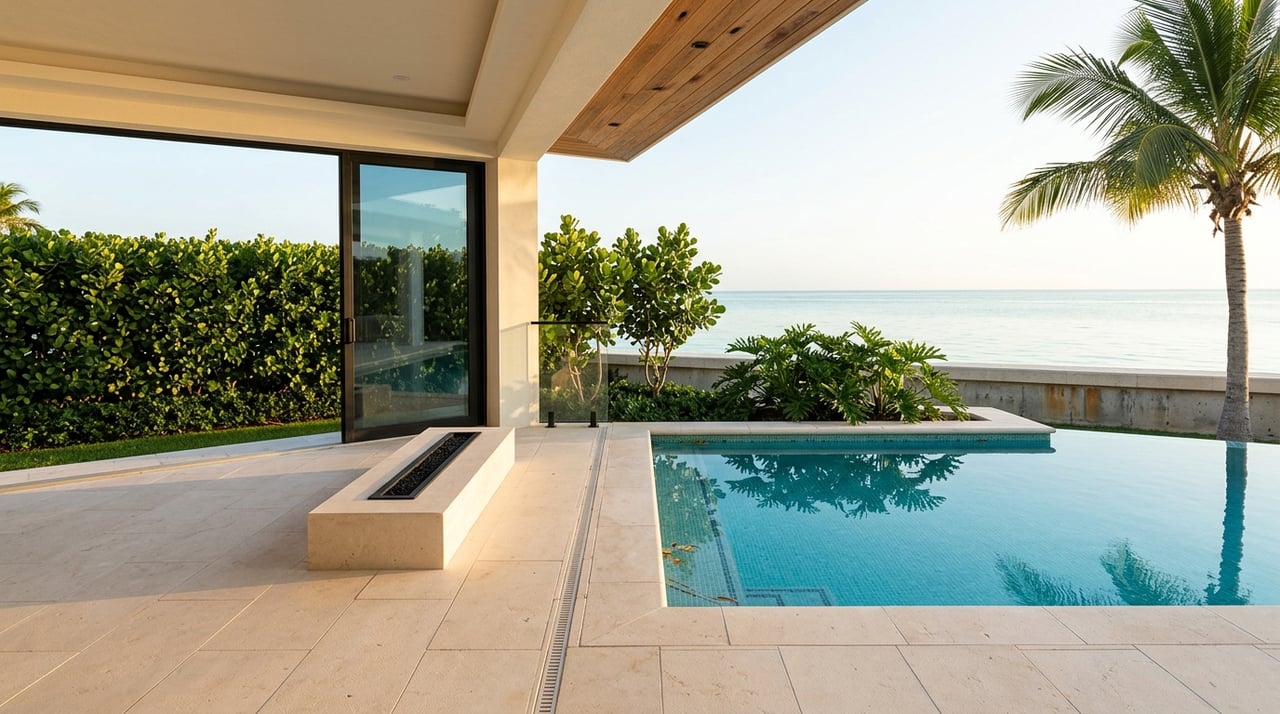
A Coconut Grove waterfront estate is not only about price. It is often about direct or near-direct access to Biscayne Bay, outdoor living that feels tied to the water, and a setting that carries long-term significance beyond the current market cycle.
The local environment supports that identity. Peacock Park is a 9.4-acre waterfront urban park on Biscayne Bay with direct access to the Intracoastal Waterway. Nearby, Dinner Key Marina offers 587 wet slips and 250 moorings within walking distance of daily conveniences.
The Grove also carries a strong sense of place tied to Bayfront history. Vizcaya sits in the north Coconut Grove area overlooking Biscayne Bay, while The Barnacle Historic State Park preserves an early sailing-era home and waterfront setting. Together, those landmarks help explain why many buyers view Grove waterfront ownership as a blend of lifestyle enjoyment, scarcity, and long-view legacy value.
Understand the Trade-Up Math First
Before you tour estates, it helps to model the full transition from your current home into the next one. That means estimating net sale proceeds, expected carrying costs, liquidity needs, and whether your timing needs to be sequential or coordinated.
In Miami, speed and certainty matter because the market remains cash-heavy. MIAMI REALTORS® reported that 38.1% of Miami sales closed in cash in March 2026, including 26.3% of single-family transactions. If you are competing for a waterfront estate, your purchase strategy should account for that environment.
A practical starting point is to review your current property value, mortgage payoff, likely net proceeds, and projected taxes and insurance on the next home. Miami-Dade’s property tools can help you review public records, compare tax profiles, and assess baseline carrying costs before you commit to a target price range.
Sell First, Buy First, or Align Both?
There is no universal answer, because the right structure depends on your liquidity, risk tolerance, and how specialized your replacement property needs to be. Waterfront estates are not interchangeable inventory, so replacement risk is often higher than in a standard move-up purchase.
If you sell first, you may gain clarity on budget and reduce financial exposure. That approach can also strengthen your negotiating position when you are ready to buy. The tradeoff is that you may need interim housing if the right Coconut Grove property is not available immediately.
If you buy first, you may secure the right asset without waiting. But this route often requires stronger liquidity and a clear plan for carrying two properties if your existing home does not close in time. In a market where cash plays such a large role, buyers who can reduce contingencies may hold an advantage.
A third option is to coordinate both closings as tightly as possible. That can work well when timing lines up, but it requires disciplined preparation, realistic pricing on your current home, and clean execution across financing, title, and inspections.
Portability and Homestead Planning Matter
If your current Miami-Dade property is your homesteaded primary residence, you may be able to transfer some of your tax benefit to the new home. The county’s Portability program allows eligible homeowners to transfer their Save Our Homes assessment difference, up to $500,000, to a new homesteaded property.
Timing is important. The portability application must be filed by March 1, and the new homestead must be established within three assessment years after the prior homestead is abandoned. For many trade-up buyers, this can affect the true after-closing cost of ownership in a meaningful way.
You should also understand the baseline protection you may be leaving behind. Under Miami-Dade’s Save Our Homes guidance, annual assessed-value increases on a homesteaded primary residence are capped at 3% or CPI, whichever is lower. If you have owned your current property for years, your taxable value may be far below current market value, so it is worth modeling how much of that benefit can move with you.
Do Not Overlook Potential Tax Consequences
Your equity position may be strong, but that does not mean every dollar of gain lands the same way. The IRS rules referenced in Miami-Dade’s Save Our Homes materials note that, in many cases, a homeowner may exclude up to $250,000 of gain, or $500,000 on a joint return, if ownership and use tests are met.
That said, tax outcomes depend on your exact facts, including title structure, residency, prior use, and how the transaction is documented. Before you make a move of this size, it is wise to consult a CPA, tax attorney, and real estate attorney to review portability, homestead treatment, home-sale gain exclusion, title, and estate-planning implications.
Waterfront Due Diligence Is Different
A bayfront or waterfront estate should be underwritten differently than a standard single-family home. The quality of the asset is not just architectural. It also includes flood exposure, elevation, insurability, prior improvements, and whether past work was properly permitted.
Start with flood-zone verification. Miami-Dade’s official flood map resources are used to determine flood insurance policy rates, and the county encourages owners and buyers to verify the exact flood zone through the interactive map or hotline. This is one of the first checks to make, not one of the last.
County disclosure rules also matter. Miami-Dade states that improved residential property in a Special Flood Hazard Area or Coastal High Hazard Area must disclose that fact to the buyer, and if the structure is substantially damaged or substantially improved, it may need to be raised to the applicable flood elevation. Those rules can influence renovation budgets, lender requirements, and long-term ownership costs.
How Flood Insurance and Elevation Affect Cost
Flood insurance is not just a line item. It can directly affect affordability, financing, and closing timing. Miami-Dade explains that elevation certificates are used by municipal officials, insurers, and lenders to determine compliance and flood insurance rates.
The same county guidance notes that flood insurance is required for federally backed mortgages in a Special Flood Hazard Area. It also points out that flood insurance policies generally do not take effect until 30 days after purchase, which can become a practical timing issue if you wait too long to address coverage.
For buyers comparing several homes, differences in elevation, flood designation, and insurability can materially change carrying costs even when purchase prices look similar. That is why a more expensive property on paper is not always the more expensive property to own.
Review Permits, Code History, and Changes Over Time
Older waterfront homes deserve extra scrutiny before closing. Over time, properties may have seen additions, shoreline work, docks, pool modifications, generator installs, or other improvements that affect value and compliance.
Miami-Dade offers public resources for open permit searches, lien-record searches, and code-compliance review. Those records can help you confirm whether the property’s built condition aligns with its legal history, which is especially important in estate properties that may have changed hands privately or been updated in phases.
A thorough review can help you avoid inheriting unresolved issues that are expensive or time-consuming to fix. On a high-value waterfront purchase, this step is not optional due diligence. It is core asset protection.
Think Beyond Today’s Price Tag
The most successful move-up buyers usually do not look at a Coconut Grove waterfront estate as only a current-year purchase. They look at it as a long-hold decision shaped by scarcity, enjoyment, and how the property fits broader family and balance-sheet goals.
That perspective is especially relevant in a place like Coconut Grove, where market data supports a strong luxury baseline and the most exceptional properties sit in an even narrower class. Waterfront positioning, bay access, lot utility, privacy, and the surrounding historic and recreational context can all contribute to a home’s long-term relevance.
At the same time, disciplined underwriting still matters. Legacy value becomes more credible when it is paired with careful analysis of taxes, flood exposure, elevation, permits, and your overall acquisition structure.
Build a Quiet, Coordinated Plan
If you are trading up into Coconut Grove, your process should be measured and confidential from the start. The right plan usually begins with a realistic valuation of your current property, a review of your likely net proceeds and portability options, and a clear acquisition brief for the type of waterfront estate you want to secure.
From there, execution matters. In a niche market, you want curated property selection, clean timing strategy, and a due-diligence process that addresses not only beauty and location, but also title, flood risk, compliance, and long-term carrying costs.
If you are considering a move into the Grove’s waterfront tier, Chris Zdancewicz offers discreet, high-touch guidance for complex luxury acquisitions and sales across Miami. When the stakes are high and the inventory is specialized, a confidential, well-managed plan can make all the difference.
FAQs
What makes a Coconut Grove waterfront estate different from a standard Coconut Grove home?
- Waterfront estates occupy a narrower, higher-value segment where bay access, lot position, privacy, and long-term scarcity often matter as much as interior size or finish level.
Should I sell my current Miami home first before buying a Coconut Grove waterfront estate?
- It depends on your liquidity, timing, and replacement-property risk, but many buyers evaluate whether selling first, buying first, or coordinating both closings best supports certainty and flexibility.
Can I transfer my Miami-Dade homestead tax savings to a new Coconut Grove house?
- If you qualify, Miami-Dade Portability may allow you to transfer up to $500,000 of your Save Our Homes assessment difference to a new homesteaded property, subject to filing deadlines and eligibility rules.
How do flood zones affect a Coconut Grove waterfront purchase?
- Flood zones can influence disclosure requirements, lender conditions, flood insurance needs, and the long-term cost of owning or improving the property.
Why does an elevation certificate matter for a Miami-Dade waterfront property?
- An elevation certificate helps insurers, lenders, and local officials determine flood compliance and insurance rates, which can affect both closing and ongoing carrying costs.
What should I inspect before closing on an older Coconut Grove waterfront estate?
- In addition to standard inspections, you should review flood-zone status, elevation-related issues, permit history, lien records, code compliance, and any past additions or shoreline-related improvements.
How should I think about long-term value when buying a Coconut Grove waterfront estate?
- It helps to balance lifestyle benefits and scarcity with practical underwriting, including taxes, insurance, elevation, flood exposure, and the property’s legal and physical condition.